

The selection of a water storage tank is a necessary investment for homeowners, business owners, farmers, and manufacturers. With increasing scarcity of water and the need for efficient water management, there are even more reasons to choose the right type of water storage tank.
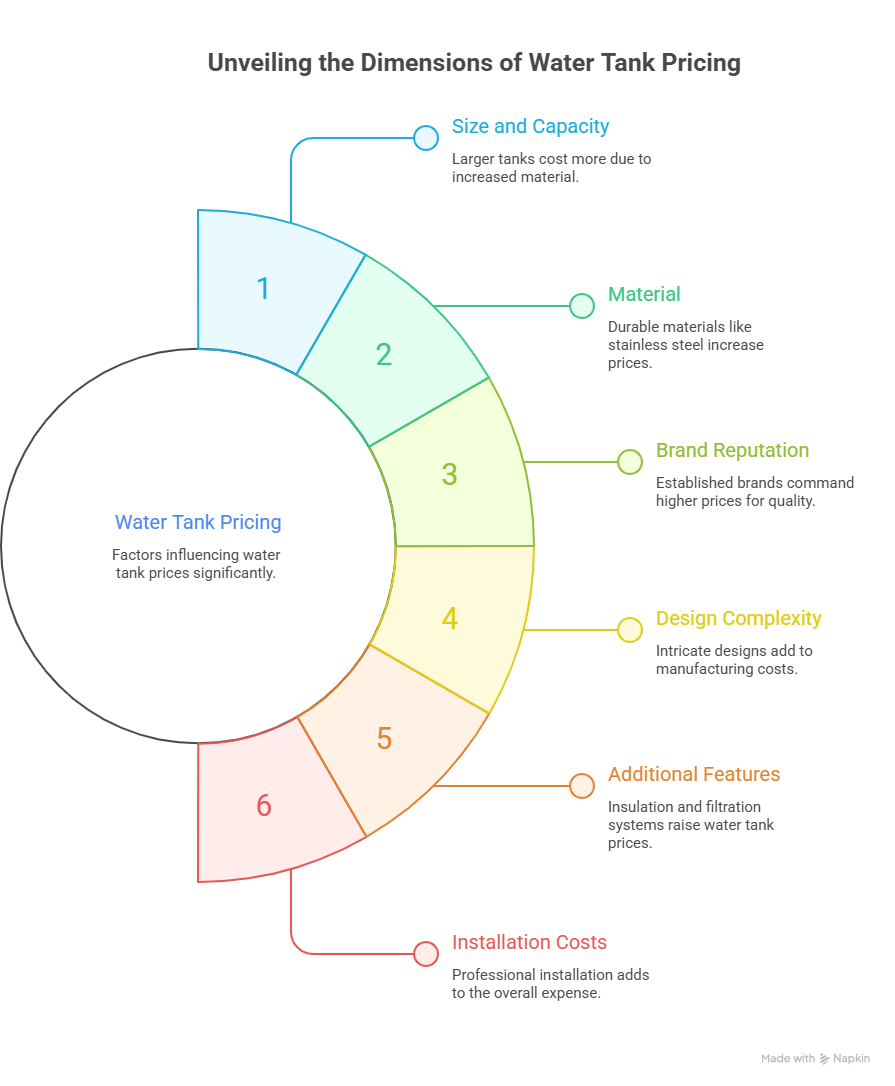
A common question that customers have when purchasing a water storage tank is: “How much should I expect to pay?” Water storage tank prices can fluctuate; however, many technical, material, and market-related aspects influence their price. By understanding these factors, customers can make educated purchasing decisions and therefore gain greater value for their investment. Within this blog, the main factors affecting water storage tank prices will be examined; trusted manufacturers such as Rotomoulders, which provide high-quality tank solutions that can meet a variety of needs, will be discussed as well.
1. Material Used in Manufacturing
Water tank pricing is influenced greatly by the type of material used to create the tank.
Plastic Water Tanks (Polyethylene)
One of the most common tank materials is polyethylene. These lightweight, non-corrosive tanks can hold drinking water. In today’s marketplace, Rotomoulders are producing premium quality polymer rotomoulded water tanks, which are made to provide a long-lasting, safe, and efficient product.
Steel and Concrete Water Tanks
Steel water tanks provide the strength required to hold large volumes of water but may require extensive care to avoid rusting. Because concrete is dense and heavy, concrete water tanks can also be an expensive item when they need to be professionally installed. The cost of purchasing and transporting steel or concrete constitutes significant portions of the overall cost of owning these products.
Price effect:
Food-grade plastic tanks tend to be the most expensive on a purchase basis but, in many cases, will last longer and require less maintenance than other types of tanks, thereby offering a lower overall cost per use.
2. Storage Capacity of the Water Tank
Water tank prices correlate with their capacities. Small tanks (500-1000 liters) are ideally suited to single family homes; medium tanks (two thousand to five thousand liters) are ideal for apartments or commercial properties; while large tanks (greater than ten thousand liters) are suited to agricultural or industrial uses. Increasing tank sizes by over five thousand liters results in increased amounts of both materials used and labour required to manufacture these tanks, meaning they require a greater level of construction reinforcement, too. Manufacturers such as Rotomoulders offer a wide selection of tank sizes (capacity-wise) and provide options to meet every customer’s unique needs and desires without sacrificing quality. Pricing will increase as the size of the tank increases, therefore purchasing a properly sized tank to prevent overpaying for water and to maximise the efficient use of storage is essential.
3. Manufacturing Technology
Manufacturing processes influence the pricing of water tanks:
Rotational Molding (Rotomoulding):
Seamless, uniform tanks with a consistent wall thickness are produced using the process of rotational molding. The combination of these characteristics provides enhanced strength, durability and leak-proofing capability. In addition, modern rotomoulding technology provides manufacturers the ability to produce high-quality tanks that can withstand harsh environmental conditions.
Blow Moulding and As Low-cost Methods:
While some lower-cost manufacturing methods will lower the overall cost of production, they may produce a lower-quality product with a reduced lifespan.
The Effect of Advanced Manufacturing Processes on Price:
The use of advanced manufacturing processes may result in a higher initial cost but will yield a greater quality product with greater lifetime savings.
4. Number of Layers in the Tank
Modern tanks have an outer layer made of polyethylene that protects the tank from UV sources (the sun) and the environment, a centre layer or multiple structural layers that provide a strong structure, and a food-grade inner layer. Using the rotomoulding (rotational moulding) method, Rotomoulders will create multi-layered tanks designed to reduce the growth of algae and help preserve the quality of the water in the tank.
Impact on Price:
Having multi-layers increases the level of safety and integrity of the tank, which results in a slight increase in the initial costs of purchasing the product, but ultimately adds a lot of value for the customer.
5. UV Stabilisation and Weather Resistance
Water tanks are affected by the sun over a period of time. UV-stabilised tanks resist damage from the sun and are therefore less likely to crack or fade.
Manufacturers that are considered to be of better quality, such as Rotomoulders – incorporate UV stabilisers into their water tanks, which makes them suitable products for use outdoors in harsh climates.
Effect on Price:
While the addition of UV protection increases the cost of manufacturing the water tank, it increases the durability of the product, therefore reducing the frequency of needing to replace it.
6. Brand Reputation and Quality Standards
Water tank pricing frequently considers the importance of the brand’s name. Well-known brands utilise:
– Quality raw materials
– The latest technology for manufacturing
– Strict control processes to ensure quality
– Certifications and conformity with applicable standards
Manufacturers of rotationally moulded products have developed a reputation for high-quality, durable, and sanitary solutions to water storage problems in both the residential as well as commercial and industrial markets through innovation and quality manufacturing practices.
7. Certification and Compliance
The regulatory agencies have established safety and quality standards for certified water tanks. The certification process verifies that a water tank is safe to use as a drinking water storage medium and is made of materials that are not harmful to human health. Rotomoulders manufacture and certify water tanks that meet strict regulatory quality requirements. Their patented tanks are suitable for use as potable water storage tanks due to their production and certification processes.
8. Installation and Transportation Costs
Logistics and installation costs impact the price of water tanks.
Plastic tanks are lightweight and therefore cost less to ship.
Since they are heavy, concrete and steel tanks require both special equipment and labour to move and install.
Rotomoulding companies make it simple for customers to install their tanks by creating a design that is simple for people to handle, which helps lower the total cost to customers.
9. Customization and Additional Features
Certain buyers may have a preference for a custom manufactured water tank that has additional specifications such as additional outlets/inlets, various choices of colors, underground and/or loft tanks as well as reinforced bases to accommodate for uneven ground. Rotomoulders have the ability to provide customized designs that fulfill each project as a unique need.
10. Market Demand and Location
Demand in specific locations, the transport distance to/from suppliers and consumers, and the amount of original equipment manufacturers (OEMs) available locally will all impact regional water tank prices. For example, an area with significant population density will likely have an excess of capacity to produce tanks on a large scale (urban vs. rural).
Local factories will also assist water tank companies in maintaining price competitiveness and streamlining their supply chain.
Why Choose Rotomoulders for Water Storage Solutions?
The price of a water tank isn’t only about initial costs. Rotomoulders have the following advantages over other manufacturers: * The use of high-quality, food-grade material; * Utilisation of advanced rotomoulding technology; * A wide variety of available capacities; * Multi-layer UV-stabilised construction; * An established reputation for providing exceptional after-sales support.
All of these factors will ensure customers a durable and efficient solution to meet their water storage needs.